We Have Always Lived in the Castle Review
A Review of Shirley Jackson'south "We Have Always Lived in the Castle"
A Paean to Self-Isolation
To those who are enjoying the flavour of self-isolation in the historic period of COVID-19, may I recommend a novel for you? I would implore yous to read Shirley Jackson's We Have Always Lived in the Castle, her final novel published in 1962 before she died at the all too tragic young historic period of 48. This is a brusk book for complete misanthropes, or those who are constantly paranoid and looking over their shoulders. While billed as a bit of a mystery novel, this is really a work of literary fiction — a book that burrows deeper and deeper into the concept of what makes isolation as information technology goes forth, and is richly marvelous, though besides a summer'southward cakewalk of a read (despite Jackson'due south insistent employ of semi-colons). Information technology is a semi-autobiographical tale, and the first chapter of the book bears this out.
In that offset chapter, we are introduced to 18-year-old Mary Kathleen "Merricat" Blackwood, on her manner from a secluded old mansion that she lives in with her elder sister, Constance, and uncle, Julian, to buy some groceries in a nearby village. Once there in the hamlet, it becomes apparent that Merricat is especially reviled, and is the source of some bullying from the townsfolk equally well as some taunting. Chapter Two explains why. Information technology turns out in the narrative at that point, we are treated to the backstory that almost everyone in Merricat'south family was poisoned at a family unit dinner with arsenic, with Constance beingness arrested for and being later on acquitted of the law-breaking. The village people believed that Constance got away with murder, although the family'south continuing was likely never seen in a good calorie-free — though the reason why is never actually explained, bated from the fact that they wielded a great bargain of power in the village through the state that they owned. All we have is Merricat's point of view, which is misanthropic. She just about hates everyone she comes into contact with, but is affectionate towards her sister and is striving to exist a better person towards her uncle, who wiles his days writing a manuscript of the murders he was present for — trying to make some sense out of what happened and why he was spared.
The novel is essentially a accident-by-blow of the daily lives of Merricat, Constance and Julian. Naught happens — that is, until a cousin, Charles, shows up at their doorstep. Normally, the family would brushoff such visitors or gently entertain them (read: string them along), but Charles is family, of grade, and what was supposed to be a visit turns into an extended stay as he grapples with the fact that the girls are sitting on a lot of cash in the house. While Charles tries to cozy upwardly to Constance and win her trust, Merricat, of course, hates the intrusion and this leads to unforeseen consequences that basically further alienates Merricat and Constance from not only the residuum of the (surviving) family but the townspeople every bit well. And that'south about the extent of this wonderfully written novel. Merricat is painted as an eccentric as she goes well-nigh her business. Just about anybody else? A liability in Merricat's eyes, except perchance for the family cat, Jonas.
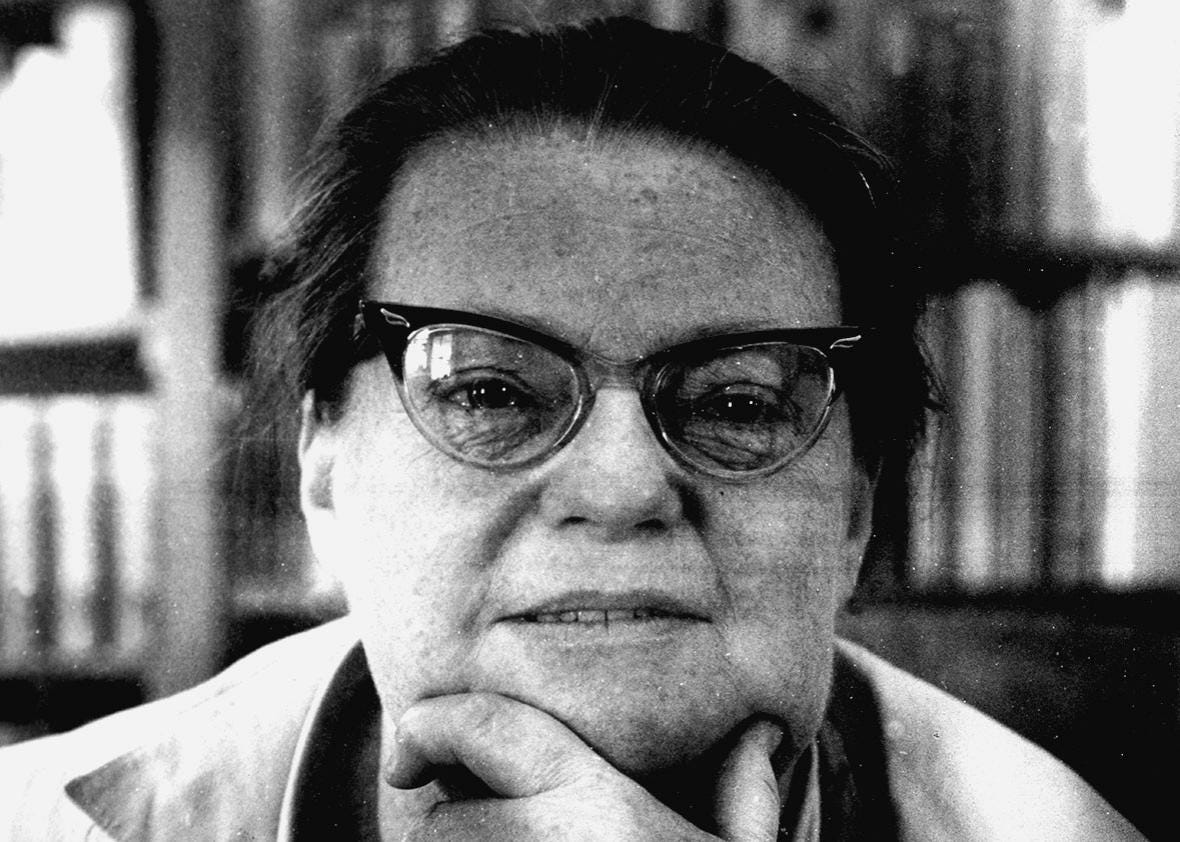
The book is interesting in that information technology is semi-autobiographical. Shirley Jackson always viewed the people of the New England boondocks she lived in (North Bennington, Vermont) with some degree of hostility, thinking that they were e'er out to get her, which led to certain anxieties that were one of the things that plagued her wellness in her later years. To that end, We Have Always Lived in the Castle is fascinating. In fact, given the catastrophe — which I'thou trying non to spoil, though parts of it seem self-evident and apparent equally you go deeper and deeper into the read — the novel feels a chip like a 20th Century fairy tale. This is the book that Jackson seemed to want to write to put farther distance between herself and the town she lived in, only, beyond that, this is the kind of volume that anyone who wants but to be left alone by people will undoubtedly cherish.
To that end, We Take Always Lived in the Castle is the perfect COVID-19 read. Not much goes on for large portions of the book, probably mirroring the experience of those living through the pandemic in their homes correct now, merely it'south still a fascinating and portending read of dread. Whenever Constance goes into the basement in this novel to take stock of the preserves that she has amassed for her cooking, 1 can recall of all of those rolls of toilet paper that accept safely found refuge in the homes of our western nations in the current situation at hand. But I jest. This is a novel about bunkering down, digging in and finding a sense of belonging in an atmosphere where you may non exist particularly well-liked every bit a person, and what solace and condolement yous can afford in what are not bang-up circumstances.
As a novel, We Accept E'er Lived in the Castle is flawed. It's central "mystery" is all too easy to figure out in the early goings. People come and go, and because Merricat is such a sociopathic figure, they are treated in an unflattering light — which adds a sense of one-dimensionality to the novel. And, to be honest, not a lot happens. You lot could hands cut this book in half — and it'due south already such a minor book that could be read in a sitting or two — and come away just equally satisfied. However, yous would take to be a curmudgeon to dislike this volume. (And y'all may have to be a curmudgeon to actually like it.) Even though Merricat is shrill as a narrator, she has her charms. And the novel does make utilise of its claustrophobic setting to great utilise. All in all, Nosotros Take Always Lived in the Castle is an interesting book. It shows that Jackson was a groovy author, semi-colons and all, and for those of united states who are living this novel correct at present — though possibly without the arsenic angle — it is a reminder that self-isolation has its luxuries. Especially when the world hates you, a sentiment which you might exist feeling right nearly now in this age of social distancing and keeping away from other people. We Have Always Lived in the Castle was originally written in the early on '60s. That it could too exist a book about now only guarantees its classic status.
Shirley Jackson's We Have Always Lived in the Castle was originally published by Viking Printing in 1962.
Of course, if you like what y'all see, please recommend this slice (click on the clapping easily' icon below) and share it with your followers.
Get in bear upon: zacharyhoule@rogers.com
Source: https://zachary-houle.medium.com/a-review-of-shirley-jacksons-we-have-always-lived-in-the-castle-7640f9c5699a
0 Response to "We Have Always Lived in the Castle Review"
ارسال یک نظر